

Eight Tips to Preach Across the Divide
If your experience is like mine, you’ve never preached in a political and cultural climate as volatile and unpredictable as the one we face in the U.S. right now. How do we preach the unifying love of Christ when many are divided? How do we preach peace in the face of vitriol? How do we preach dignity when displays of disrespect are paraded as badges of honor?

I Do Not Think "Amen" Means What You Think it Means: 5 Ways to Better End Your Sermon
Ending a sermon with “Amen” is both redundant and ill-fitting with the purpose of a sermon. In truth, though, most preachers aren’t worried about these technicalities when they finish with “Amen.” They simply don’t know how else to conclude. Consider these five types of conclusions for a more effective close instead.
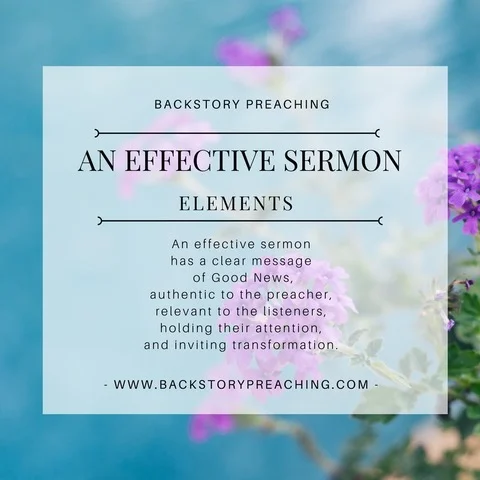
Was Your Easter Sermon Effective? 6 Elements to Help You Evaluate and Know
Now that the the candy's eaten, the dishes are washed, and the schedule has settled back into something resembling normalcy, take a few minutes to reflect on your Easter sermon. Was it effective? How would you know? Using BsP's 6-elements of an effective sermon, see where you excelled and where you can grow for your next sermon.

How to Reach Hearts on Both Sides of an Issue
Not since the Civil Rights era have preachers been so called upon to discern and proclaim what it means to follow Jesus Christ and love one’s neighbor as oneself.
With so many competing viewpoints, so many people unwilling to dialogue, and so much fear driving people apart, how can preachers proclaim the dignity of every human being in a way it can be heard by people on both sides of the divide?

Ask a Supply Preacher: What's it Like to Preach in a Different Context Each Week
As churches increasingly struggle to maintain full-time preaching staff, Cathie Caimano of Free Range Priest sees opportunity for a new model. In this guest post, she discusses supply preaching and what it's like to preach in a different context each week.

How (If?) to Preach the Headlines of the Day: Guiding Wisdom for Preachers
Should you preach on current events? And if so, how?
Discover guiding wisdom from preachers you respect on how to navigate the news headlines pummeling our social discourse.

Your Story: Does it Belong in the Pulpit?
Does telling your own story
in this sermon for these people
point listeners towards God
or towards you, the preacher?

It's a Day of Reflection, So Let's Reflect on your Preaching
In the spirit of reflection, we're sharing four of our most popular blog posts to help you think about your craft and process. May you find something to inspire your preaching and preaching life.

You spoke right to me! How did you know?
A relevant sermon connects our listeners to our message in a way that helps them find God in the midst of their lives. Lent, this season of remembrance and anticipation, is a prime time to address our listeners' challenges and questions directly.
To help listeners feel as though we're speaking right to them, we need to understand their context, their struggles, and their hopes that they'll be OK.

Should You Preach "Relevant" Sermons?
Googling the idea of a sermon that is "relevant to the listener" brings up all kinds of disagreement. Some think the idea of relevance is juvenile or manipulative, that it's a cheap ploy to seem current at the expense of truth. Others say it's essential.
Here's just a sampling of what people have to say about "relevant" sermons:
- Be true to yourself and your sermon will automatically be relevant to the listeners.
- We're not supposed to consider the relevance of the listener but the relevance of the Gospel.
- Relevance will be discerned when we think "from the pew" instead of "from the pulpit."
- "Relevance" is a homiletical and theological disgrace because God is eternally relevant.
Is that the case, though?
Perhaps to determine whether our sermons should be relevant, we should consider what it would mean to preach a sermon that is NOT relevant.