The Sermon as Conversation (A Guest Post)

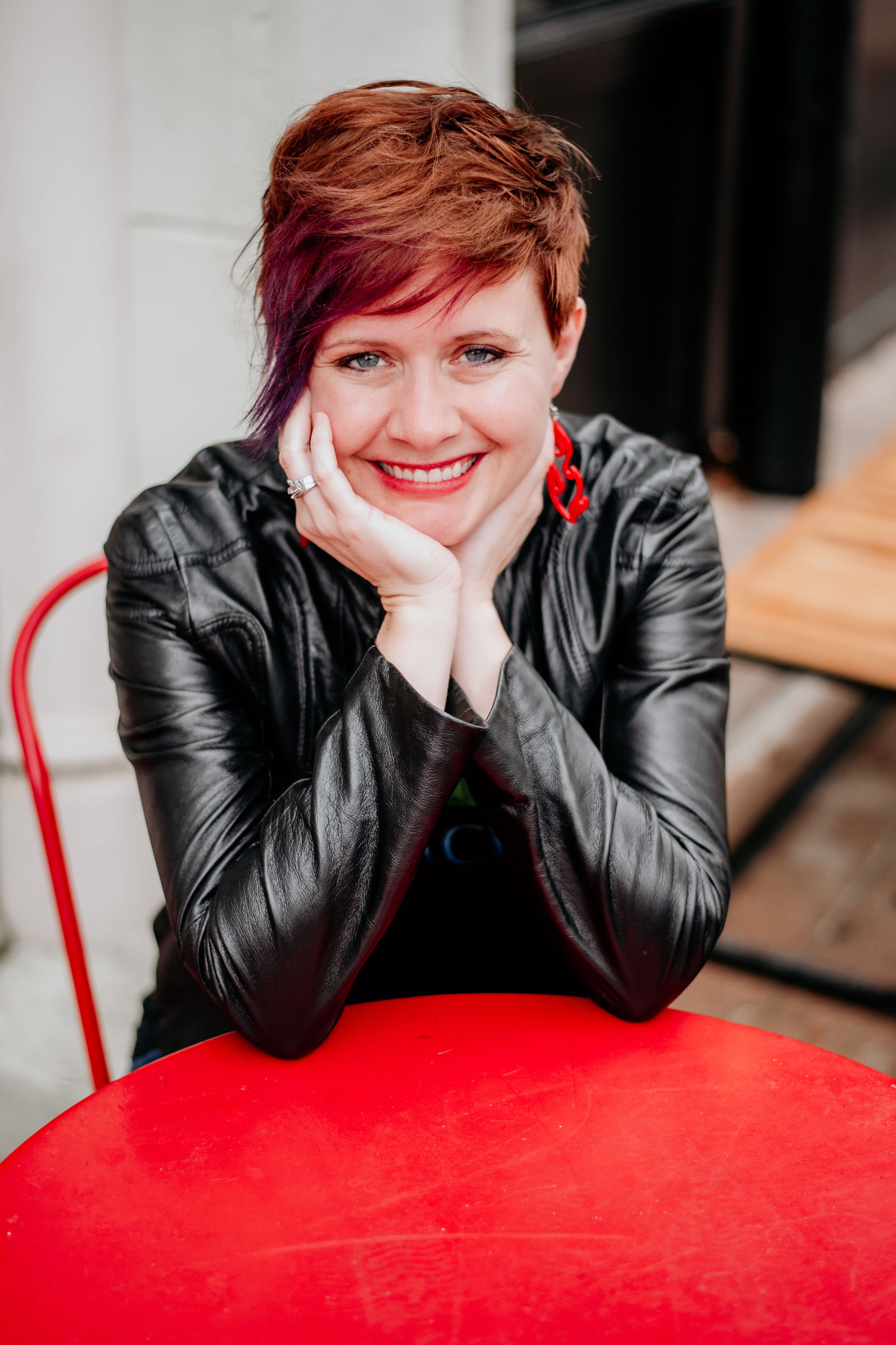
The Rev. Kyndall Rae Rothaus is a poet, preacher, spiritual director, ordained minister, and feminist theologian. She is the author of Thy Queendom Come: Breaking Free from Patriarchy to Save Your Soul and Preacher Breath. She is the co-founder and co-director of Nevertheless She Preached, a national conference that elevates and centers female, queer, and BIPOC voices. She is also the founder of Kindle Your Soul Fire where she works with marginalized clergy and with individuals healing from religious trauma. She is a queer woman and the single mom of two beautiful children she adopted from foster care. You can learn more her website, kyndallraerothaus.com, or follow her on IG @KyndallRaeRothaus. You can keep up with her non-profit work @neverthelessshepreached.
Rothaus will be speaking to The Collective+ on Tuesday, July 28th, at 2pm Central on “Engaging the Congregation in Dialogue.”
When we hear the word sermon, we tend to think of pulpits.
Microphones. Platforms. Singular personalities. A voice. A message. An interpretation.
What if, instead of pulpits, we imagined tables?
Living rooms? Circles? Communities? Voices. Messages. Interpretations.
In the Beginning Was—the Conversation
The word sermon comes from the Latin word sermo, meaning discourse.
Not a monologue, or a lecture, or a teaching moment, but a discourse; that is, dialogue.
Conversation.
In her book, Church of the Wild, Victoria Loorz argues that the famous opening of the Gospel of John, “In the beginning was the Word,” is, in fact, a mistranslation.
Until the fourth century, logos was translated sermo, meaning conversation.
As men in power began to argue about the One True Interpretation of It All, verbum or word became the new translation—”the inarguable Word, the end-of-discussion Word, the everyone else’s-word-is-heresy Word.”
By contrast logos:
“is similar to what biologists are revealing about the way trees talk to one another and what quantum scientists have discovered at the center of molecules: not things, but relationships.
Logos is about the divine relationship between all things.
The system of their connection: conversation.”
Imagine this: In the beginning was the Conversation, and the Conversation was with God, and the Conversation was God.
Shifting our Gaze From up to across
For those who are used to sitting in pews looking up to the man at the pulpit, imagining the sermon as dialogue might seem strange.
And yet those of us who preach know that the preaching act begins (and continues) in conversation with the text, in conversation with God, in conversation with one’s own heart and one’s lens,in conversation with the characters in the text—characters both named and unnamed, in conversation with one’s community, in conversation with the oppressed, in conversation with the natural world, in conversation with sorrow, imagination, and joy, in conversation with the latest act of injustice and the loftiest dream of justice.
Sermons do not come down to us from on high.
They rise up out of our blood and sweat and tears and wombs, because it is in that mingling of bodies and lives that the word becomes flesh.
Sermons are not generated in an isolated preacher’s mind; sermons pour forth as communication between hearts.
I was first introduced to dialogical preaching as an actual homiletical style by Rev. Molly Brummett Wudel and Rev. Megan Pardue.
They taught me that the sermon itself can be a real-time conversation between the preacher and the people.
A dialogical sermon levels out the hierarchy and gives power and voice to everyone in the room. In a day and age when authoritarianism is dangerously on the rise, preaching as dialogue can be a prophetic, counter-cultural act of resistance.
do we dare share the Mic?
Unfortunately, this requires trusting your people. Yikes!
Every preacher knows it’s hard to trust a room where everyone has access to a mic.
But maybe, just maybe, it’s time to step out of our comfort zones and lead by sharing power instead of hoarding it—even in the pulpit.
I’ll be honest.
I’m still learning this dialogical style, and it’s often easier to just do what I know how to do best and write a sermon manuscript in all my own words.
But I’m increasingly interested in how I can adapt the homiletical moment from a monologue into a collaborative creative act.
Tell me. Does it interest you too?
Summer Series: 3 Conversations Every Preacher Needs Before Fall
Before the program year descends, Backstory Preaching’s Founding Steward, Lisa Cressman, is hosting a free summer series—Three Conversations Every Preacher Needs Before Fall—on the practices that will ground you when the fall calendar fills, activities resume, and the news gets loud with U.S. midterms approaching.
All sessions will be at noon Central. Save your seat below:
July 28: Start from Stillness, Not Scramble. What happens to your sermon prep when prayer comes before the commentary?
August 4: The Sermons People Remember. What's different about a sermon someone takes with them beyond the Sunday service?
August 11: The Rhythm Behind Joyful Preaching. What kind of rhythm will hold you steady once fall programming is in full swing?
Each one stands on its own, so come to all three or just the one you need most right now.
Let's set you up for a fall that supports you and your preaching.